

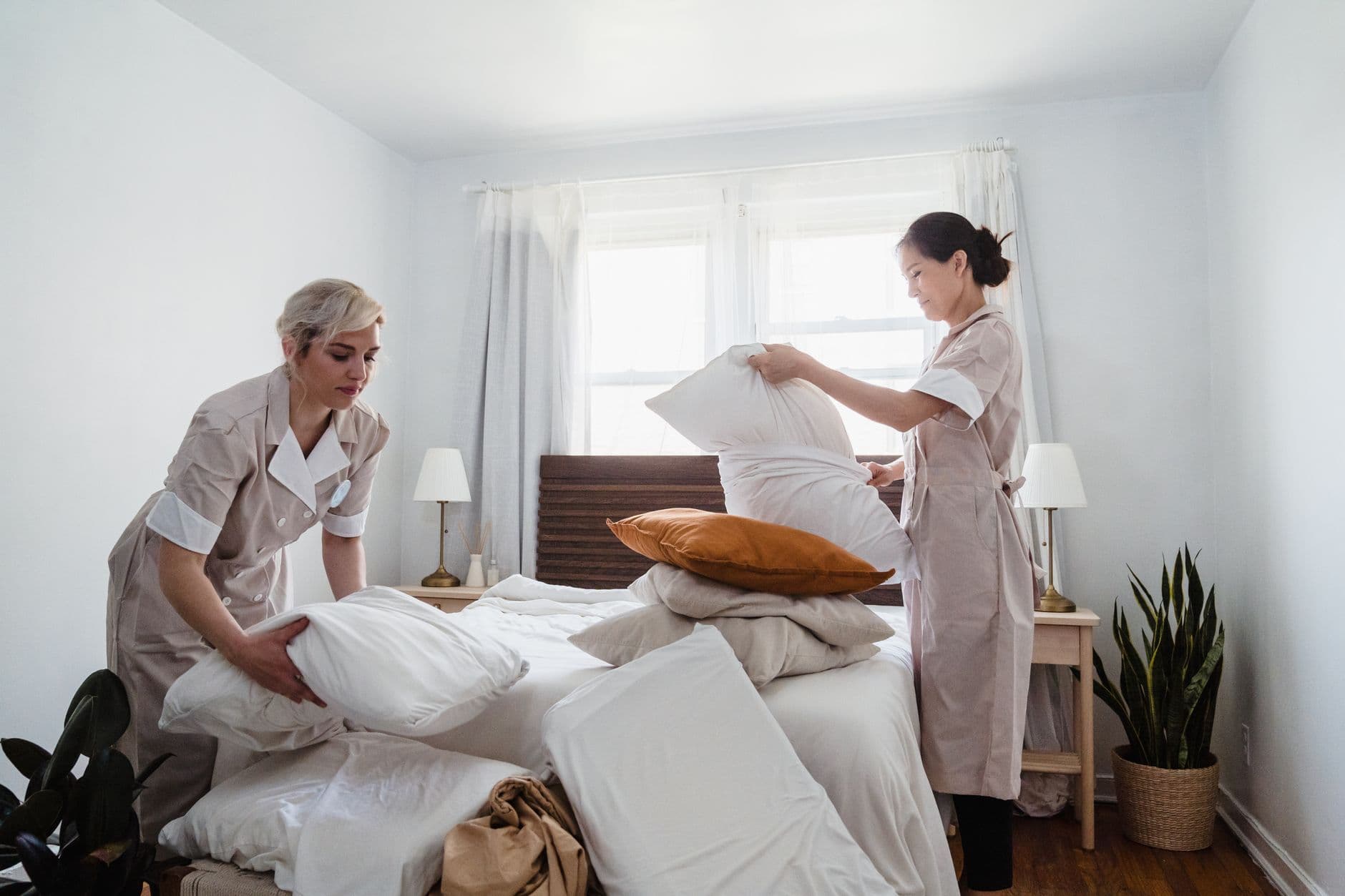
Short answer: Housekeeping business cards should list your name, phone number, service area, and one or two services you specialize in. Keep the design simple, print on sturdy cardstock, and hand them out at every job. But paper cards alone won't fill your schedule. Most homeowners now search online first, which is why pairing cards with a profile on a booking app like Wind gets you more consistent work.
Why housekeeping business cards still matter
A housekeeping business card is a small, physical reminder that someone can hand to a neighbor, tape to a fridge, or drop in a mail slot. Even in 2024, cards work because cleaning is a trust-based, word-of-mouth business. A client who loved your work last Tuesday can hand your card to a friend without you doing anything.
The catch is that a card only works if someone remembers to use it. Most people don't carry cards around for months waiting to need a cleaner. That's why cards work best as a backup, not your main way of getting booked. Pair them with an online presence so people can find you the moment they need help, not just when they happen to have your card in a drawer.
What to include on your card
Keep it simple. A cluttered card gets ignored. Include:
- Your first name (and last initial if you want)
- Phone number
- Service area, like "Serving Tampa and South Tampa"
- One or two specialties: deep cleaning, move-out cleaning, recurring service
- A QR code linking to your booking page or online profile
Skip your home address. Skip a long list of every service you offer. A prospective client wants to know three things fast: what you do, where you work, and how to reach you.
If you're still figuring out your service list and pricing, our guide on how to start my own housekeeping business walks through the basics, including how to price your first jobs.
Design tips that get callbacks
Simple design wins over flashy design. Use:
- One or two fonts, nothing decorative or hard to read
- A light background with dark text, or the reverse. Avoid busy patterns behind text
- A short tagline instead of a paragraph. "Reliable house cleaning, Tampa Bay" says more than three sentences ever will
- Matte finish cardstock. It feels sturdier than glossy and takes pen notes if a client wants to jot down a date
A card with a photo of you (not stock cleaning supplies) builds trust faster. People hire a person, not a logo. That's also why platforms like Wind show first names and real faces of pros instead of business names. It helps clients feel like they know who's showing up before the day of the appointment.
Where to print business cards affordably
You don't need a graphic designer or a big print run to start. Local print shops and online print services both offer small batches at low costs, and many let you use a template and swap in your own text and photo. Order 100 to 250 to start. You'll learn what works and what doesn't before committing to a bigger batch.
The U.S. Small Business Administration has free guides on low-cost marketing tools for small service businesses, including print materials, if you want more detail on budgeting for this kind of spend.
Digital business cards vs. paper cards
A digital business card, like a shareable link or QR code, does everything paper does and adds a few things paper can't. It can update instantly if your phone number or service area changes. It can link directly to reviews, before-and-after photos, or a booking page. And it costs nothing to send a hundred of them.
Many housekeepers now use both: a paper card for in-person moments, and a digital link for texting or posting online. If you're building a digital presence, a listing on a local app that Tampa homeowners already use to book cleanings does more heavy lifting than either version of a card alone.
Business cards vs. building your client base online
Cards get you occasional referral leads. They don't help someone find you at 9pm on a Sunday when they're searching for a cleaner for Monday morning. That's the gap most housekeeping businesses run into. A card sitting in someone's junk drawer isn't competing with a search result showing five cleaners with real reviews, prices, and open time slots.
A Tampa housekeeper who started on Wind last spring told us she'd handed out maybe 40 business cards over two years and gotten three calls back. After setting up her Wind profile, she booked her first new client within four days, someone searching for weekly cleaning near Seminole Heights who'd never have found her card. She still keeps cards in her bag, but she says the app is what actually fills her calendar now.
Wind shows exact pricing and duration upfront on every listing, so clients know what they're getting before they message. Booking happens entirely in the app, no phone tag, no waiting for a callback. Clients can message pros directly with read receipts, request a reschedule if plans change, and tip through the app after the job is done. Reviews are tied to verified completed bookings, so a client browsing your profile is seeing real feedback from real jobs, not anything gameable.
If you're weighing how much to charge on top of getting found, check out our breakdown of how much to charge for deep cleaning a house so your pricing lines up with what Tampa clients expect to pay.
Keeping your card and online profile consistent
Whatever name, phone number, and service area you put on your card should match what's on your online profile exactly. Mismatched information (an old number, a service area you no longer cover) costs you leads and looks unprofessional. Update both at the same time whenever something changes.
If you're not sure how local housekeepers use apps to manage bookings and client messages day to day, our post on the housekeeping app Tampa cleaners use covers how that side of the business works, from scheduling to getting paid.
For a sense of how service-based small businesses are trending nationally, the Bureau of Labor Statistics tracks demand and wage data for housekeeping and cleaning roles, which is useful context if you're deciding how much to invest in marketing versus other parts of your business.
Common questions
Do housekeeping business cards actually bring in clients?
They help with referrals and repeat business, but they rarely bring in new clients on their own. Most homeowners search online first, so a card works best alongside an online profile or app listing where people can already find you.
What should I put on a housekeeping business card?
Your first name, phone number, service area, one or two specialties, and a QR code linking to your booking page or profile. Keep the design simple and skip your home address.
How many business cards should I order to start?
Order 100 to 250 to start. That's enough to hand out at jobs and test your design before committing to a larger print run.
Are digital business cards better than paper ones?
Digital cards update instantly and can link to reviews or booking pages, which paper can't do. Many housekeepers use both: paper for in-person handoffs, digital for texting or online sharing.
Do I still need a business card if I have a Wind profile?
A card is still useful for in-person referrals, but a Wind profile does more of the work of getting you booked since clients can find you, see your pricing, and message you directly without waiting for a callback.