

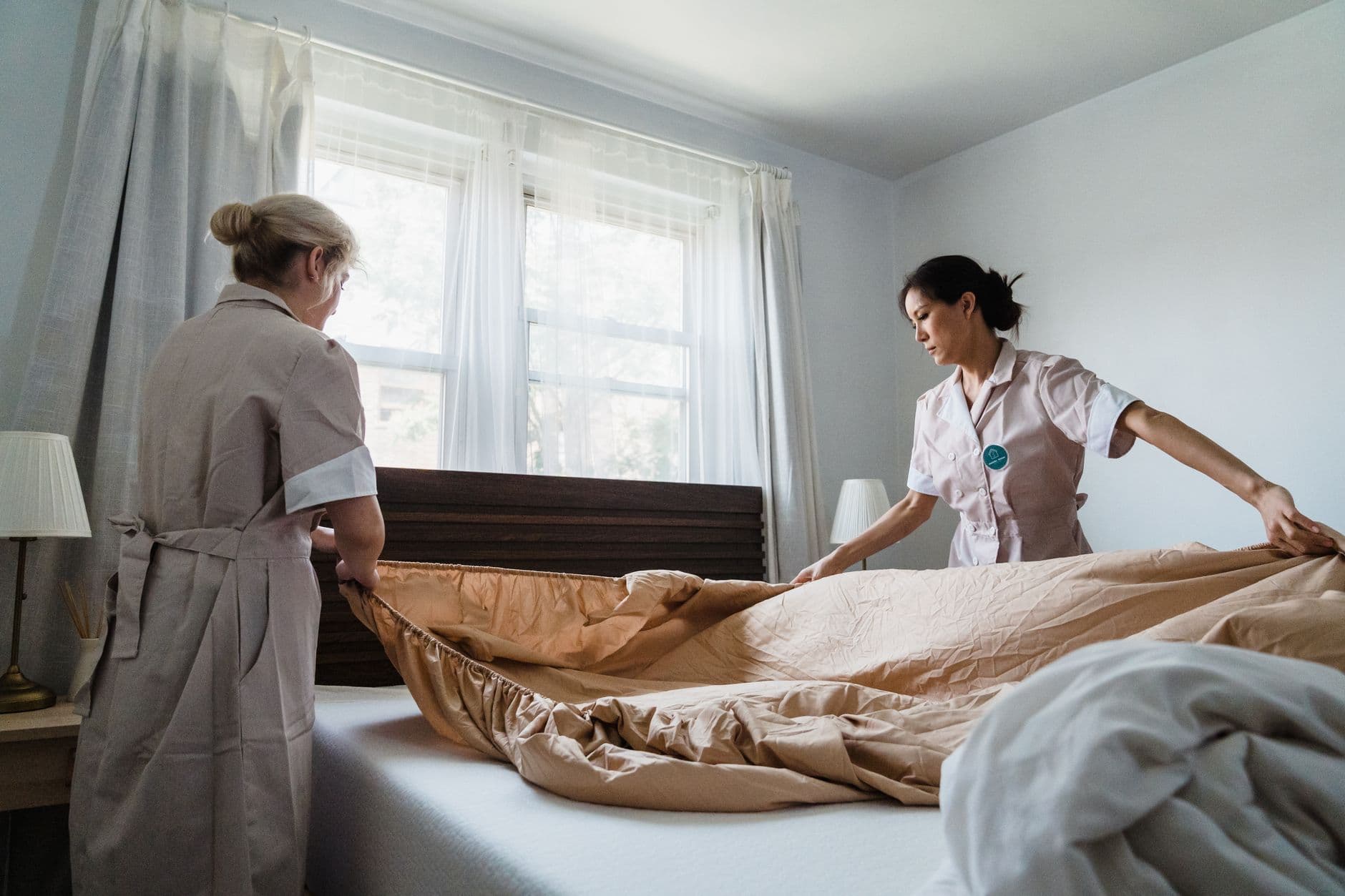
Short answer: To start your own housekeeping business, register your business name with the state, get basic liability insurance, decide on pricing, buy supplies, and start booking clients through word of mouth and a booking platform. Most people can be earning money within two to four weeks.
What it takes to start a housekeeping business in Tampa
You don't need a storefront, a franchise fee, or years of experience to start a housekeeping business. You need reliable transportation, basic cleaning supplies, a way to take payments, and clients who trust you enough to hand over their house keys. Tampa's growing population and steady stream of new homeowners and renters make it a solid market for cleaning services right now.
The real work isn't scrubbing floors. It's setting up the business side correctly so you get paid on time, stay legal, and don't burn out chasing clients by phone. Here's the full process broken into steps that actually matter.
Register your business and get licensed
First, pick a business structure. Most solo housekeepers start as a sole proprietorship or a single-member LLC. An LLC costs more upfront but protects your personal assets if something ever goes wrong at a client's home. You can file for an LLC through the Florida Division of Corporations for a modest state fee.
Next, register a fictitious business name (a "DBA") if you're operating under anything other than your own legal name. Then apply for an Employer Identification Number through the IRS, even if you're a one-person operation. You'll need it for opening a business bank account and filing taxes separately from your personal income.
Check with the City of Tampa or Hillsborough County for a local business tax receipt. Requirements vary by county, so confirm what applies to your address before you start taking clients.
Get insured before your first job
General liability insurance is non-negotiable. If you break a vase or a client claims something went missing, insurance is what keeps that from becoming a lawsuit that ends your business before it starts. Bonding is a smart add-on too. It reassures clients who are letting a stranger into their home while they're at work.
Expect to pay a modest monthly premium for a basic policy as a solo cleaner. That cost is worth it the first time a client hesitates to book because you're uninsured.
Price your services the right way
Pricing is where most new housekeepers underprice themselves out of a sustainable business. Market rates for standard house cleaning typically run $120 to $235 per visit, depending on home size and how often the client books. Deep cleans and move-out cleans cost more because they take longer and require more product.
Decide upfront whether you'll charge flat rates by home size or hourly. Flat rates are easier for clients to understand and easier for you to quote quickly. If you're unsure how to structure your pricing for bigger jobs, our guide on what to charge for deep cleaning a house breaks down realistic numbers by job type.
Don't compete purely on being the cheapest option in Tampa. New cleaners who race to the bottom on price end up doing more homes for less money and burn out within a year.
Buy supplies and set up your workflow
You don't need commercial-grade equipment on day one. A vacuum, mop, microfiber cloths, an all-purpose cleaner, glass cleaner, and a caddy to carry it all will get you through most standard cleans. Buy in bulk once you have repeat clients, since supply costs eat into margin fast if you're restocking constantly.
Build a simple checklist for each type of clean (standard, deep, move-out) so your service is consistent every time. Consistency is what turns a one-time booking into a recurring client, and recurring clients are what make a housekeeping business profitable instead of just busy.
Find your first clients without cold calling
Word of mouth is still the strongest lead source for a new housekeeping business. Ask friends, family, and neighbors if they need a cleaner, and ask every satisfied client for a referral. Local Facebook groups and neighborhood apps can generate a handful of early jobs too.
The faster path in a market like Tampa is getting listed somewhere clients are already searching. A lot of new housekeepers spend their first few months answering phone calls and texting quotes back and forth, which eats hours you could spend cleaning. Getting set up on a booking platform where clients can see your availability and price upfront cuts that back-and-forth out entirely.
A cleaner in Tampa who started her business out of her car six months ago told us she used to lose half her leads to people who just wanted to text a few questions and never followed up. After she got listed and started taking bookings directly through the app, her calendar filled up two weeks out, and she stopped chasing quotes altogether.
Use booking software instead of managing calls yourself
Once you have even three or four regular clients, manually tracking appointments by text message starts to break down. Missed messages mean missed income. A booking platform handles scheduling, payment, and communication in one place so nothing falls through the cracks.
On Wind, clients see your exact price and appointment length before they book, so there's no awkward quoting conversation. Bookings happen end to end in the app with real-time availability, meaning no phone tag and no callbacks. Messaging happens in-app with read receipts, so you know your reply was seen. Payment runs through Stripe, with cards saved to the client's account, so you're not chasing cash or Venmo requests. When a client wants to reschedule, they submit the request in the app and you approve or decline it on your own time. Reviews are tied to verified completed bookings, which means the reputation you build is real, not gameable.
If you're weighing whether an app-based approach fits your workflow, this breakdown of how a housekeeping app works in Tampa walks through what changes once you stop managing bookings by phone.
Common mistakes new housekeepers make
Underpricing is the biggest one, covered above. The second is skipping insurance to save money early, which is the exact wrong place to cut corners. The third is taking every job that comes in without a system for tracking supplies, mileage, and hours, which makes it impossible to know if you're actually profitable by the end of the month.
The fourth mistake is relying entirely on one lead source. A single referral client canceling shouldn't wipe out your week. Diversify how new bookings reach you from the start, whether that's referrals, local ads, or a booking platform that puts you in front of people already searching for a housekeeper near them.
According to the Bureau of Labor Statistics, demand for housekeeping and maid services continues to grow steadily, which means the market has room for well-run, reliable operators, not just the cheapest bidder.
Common questions
How much does it cost to start a housekeeping business?
Most people start for a few hundred dollars covering LLC filing, a basic insurance policy, and initial supplies. You don't need a large upfront investment since most housekeeping businesses start solo without employees or a physical location.
Do I need a license to clean houses in Florida?
Florida doesn't require a special state license to clean private homes, but you do need to register your business name, get an EIN, and check for a local business tax receipt through your county or city.
How much should I charge as a new housekeeper?
Market rates for standard house cleaning run $120 to $235 per visit depending on home size and cleaning frequency. Deep cleans cost more. Price based on the work involved, not the lowest rate you can find in your area.
How do I get my first clients?
Start with referrals from friends and family, ask every client for a review or introduction, and get listed on a booking platform where people in Tampa are actively searching for a housekeeper.
Is housekeeping a profitable business to start?
It can be, especially with recurring clients who book weekly or biweekly. Profitability depends on pricing correctly, controlling supply costs, and keeping your calendar full without wasting hours on unpaid quoting calls.
Do I need insurance to start cleaning houses?
Yes. General liability insurance protects you if something is damaged or goes missing in a client's home. Most clients also feel more comfortable booking a cleaner who carries insurance.