

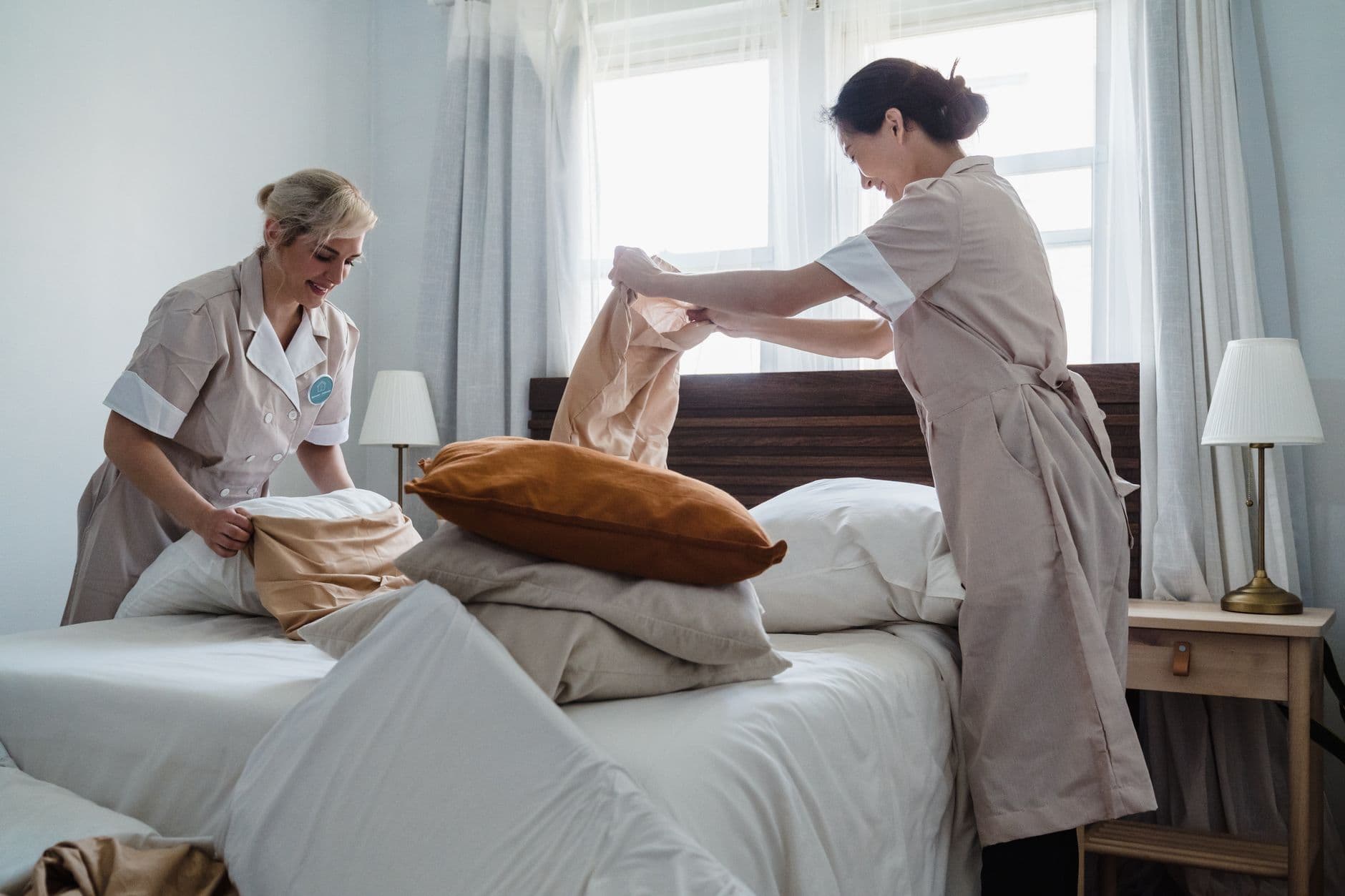
Short answer: Airbnb housekeeping is turnover cleaning between guest stays, and it typically costs more than a standard home clean because it has to happen fast, often same-day, with a strict checklist for staging, laundry, and restocking. In Tampa, hosts usually pay somewhere in the range of standard cleaning rates, sometimes higher for quick turnarounds.
What airbnb housekeeping actually includes
Airbnb housekeeping isn't the same as a regular house cleaning. It's built around one goal: getting the unit guest-ready before the next check-in, sometimes with only a few hours between checkout and check-in.
A typical turnover clean covers:
- Stripping and remaking all beds with fresh linens
- Washing towels, sheets, and any used kitchen linens
- Full bathroom clean and disinfecting
- Kitchen wipe-down, dishes, and appliance check
- Vacuuming and mopping all floors
- Restocking toiletries, coffee, paper towels
- Staging the space (folded towels, straightened furniture, fresh scent)
- A quick damage or missing-item check
Some hosts also want laundry done on-site if the unit has a washer and dryer, which adds time to the job. This is worth confirming upfront since it changes both price and turnaround time.
How much airbnb housekeeping costs in Tampa
Pricing depends on unit size, how messy the previous guests left it, and how fast the turnaround needs to be. Industry data puts average house cleaning between $120 and $235, and turnover cleans for short-term rentals often land in that same range or slightly above it because of the tighter timelines and laundry work involved.
A studio or one-bedroom condo near the water usually costs less than a three-bedroom house with multiple bathrooms. Same-day turnovers, especially ones booked with short notice, tend to run higher than cleanings scheduled a day or two ahead.
If you're managing multiple listings, ask about recurring rates. Cleaners who work with hosts regularly often set a flat per-turnover price once they know the property, which makes budgeting easier than paying a different rate every time.
Turnover cleaning vs. regular house cleaning
The biggest difference is speed and consistency. A regular house cleaning is scheduled around a homeowner's routine, once a week or every other week, with some flexibility on timing. Turnover cleaning runs on a guest's check-out and check-in times, which the host doesn't control.
That means the cleaner has to work on a fixed clock, sometimes with only two or three hours to flip the unit. They also need a repeatable checklist so nothing gets missed, since there's no owner walking through before the next guest arrives.
Regular cleaning also focuses on maintenance. Turnover cleaning focuses on presentation. Guests expect the space to look untouched, which means extra attention to things a homeowner might not notice daily, like water spots on glassware or lint on couch cushions.
How to book airbnb housekeeping between guests
The hardest part of managing a short-term rental is timing cleanings around unpredictable checkout times. A guest checking out at 11 a.m. with a new guest arriving at 3 p.m. leaves a narrow window, and last-minute cancellations or early check-ins can throw off the whole schedule.
Booking through an app instead of calling around removes a lot of that friction. On Wind, you can see real-time availability, message the cleaner directly if checkout runs late, and get an exact price and duration before you book, so there's no guessing about whether the turnaround will fit your schedule. If a guest checks out early, you can send a message right in the app instead of hunting down a phone number.
A host in South Tampa started using Wind after a guest left a unit trashed on a Sunday morning with new guests arriving that same afternoon. She sent a message to her usual cleaner through the app, got a confirmed time within the hour, and the unit was spotless before the next check-in. She said not having to call three different people to find someone available was the real win.
If you're managing several units, look for a housekeeper who's comfortable with recurring bookings and short lead times, since that's the norm with short-term rentals.
What to look for in an airbnb cleaner
Not every house cleaner wants turnover work, and that's fine, but you want someone who's clear about a few things before you book them regularly:
- Can they work around variable, sometimes same-day, schedules?
- Do they follow a checklist so quality stays consistent guest to guest?
- Are they comfortable doing laundry on-site if needed?
- Will they flag damage or missing items instead of just cleaning around them?
Reviews tied to actual completed jobs matter more here than a general star rating, since turnover cleaning quality can be inconsistent between providers. Wind's reviews are only left after a verified booking is completed, so you're seeing real feedback from real turnovers, not just a generic rating.
If you're a cleaner looking to build a business around this kind of work, it helps to understand the operational side first. Starting a housekeeping business in Tampa covers licensing, pricing, and how to structure recurring client work, which applies directly to short-term rental cleaning. There's also a broader guide on how to start your own housekeeping business if you're building this out as a full operation instead of picking up occasional jobs.
Setting up a cleaning schedule for back-to-back bookings
High-turnover properties, especially ones booked most weekends, need a cleaner who can commit to a standing schedule rather than one-off bookings. A few things make this easier:
- Share your booking calendar or sync check-in/check-out times in advance
- Build in buffer time for late checkouts, even 30 minutes helps
- Keep a stocked supply closet on-site so the cleaner isn't running to the store mid-turnover
- Confirm a backup cleaner for weeks when your main person is unavailable
The EPA's guidance on cleaning and disinfecting is a useful baseline for what products and methods actually reduce germs between guests, especially for high-touch surfaces like doorknobs and remotes. Pairing that with a clear staging checklist keeps quality consistent even if you rotate between a couple of cleaners during busy months.
Hosts running multiple properties should also check local requirements. The Florida Department of Health publishes general sanitation guidance that applies to short-term lodging, which is worth a quick read if you're new to hosting.
Common questions
How often does an Airbnb need to be cleaned?
An Airbnb needs a full turnover clean after every single guest stay, no exceptions. If you rent nightly and have back-to-back bookings, that could mean daily cleanings. Weekly or monthly renters still need at least a light clean between longer stays.
Is Airbnb housekeeping more expensive than regular house cleaning?
It can be. Industry data puts average house cleaning between $120 and $235, and turnover cleans often fall at the higher end of that range because of tight timelines, laundry, and staging work that regular cleanings don't require.
Do I need to provide cleaning supplies for my Airbnb cleaner?
Most cleaners bring their own basic supplies, but many hosts keep a stocked closet on-site with extra linens, toiletries, and cleaning products so restocking during turnovers is faster. Confirm this with your cleaner before your first booking.
Can I book same-day Airbnb cleaning?
Yes, many cleaners handle same-day turnovers, but availability tightens on weekends and holidays. Booking through an app with real-time availability, like Wind, makes it easier to find someone open on short notice instead of calling around.
How do I tip an Airbnb cleaner?
You don't need cash or Venmo. On Wind, you get an in-app tip prompt right after the job is marked complete, so you can tip directly through the app without tracking anyone down.
What happens if my cleaner is running late for a turnover?
Use in-app messaging to check status in real time instead of waiting on a call back. If the timing won't work for your next check-in, you can also send a reschedule request, which the cleaner then approves or declines.