

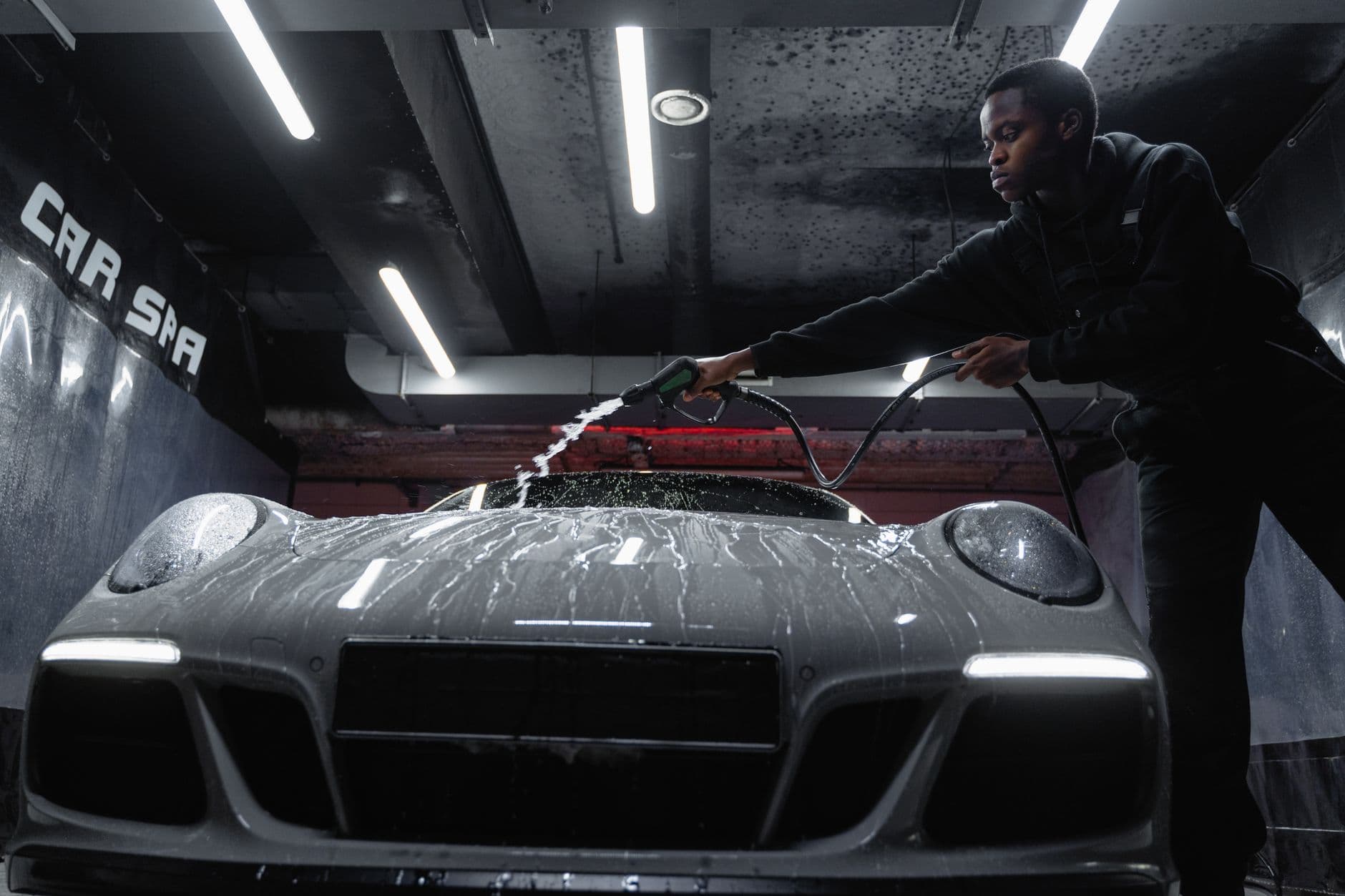
Short answer: The best way to maintain car exterior condition is to wash it weekly, apply wax or sealant every two to three months, and protect the paint from Tampa's sun, salt air, and heavy rain. Consistency matters more than any single product.
Wash your car weekly, not when it looks dirty
Waiting until your car looks dirty is the fastest way to damage the paint. Dust, pollen, bird droppings, and road grime sit on the clear coat and slowly break it down. In Tampa, that process moves faster because of the heat and humidity.
Wash your car once a week if you park outside, every ten to fourteen days if it stays in a garage. Use a pH-neutral car wash soap, not dish soap, which strips wax and protective coatings. Two buckets (one for soap, one for rinsing your mitt) keep grit from scratching the paint as you work.
If you don't have time for a weekly wash, a mobile car detailer can come to your driveway or office lot and handle it while you're at work.
Wax or seal the paint every 2 to 3 months
Wax and paint sealant are the actual barrier between your clear coat and the elements. Without one, every wash strips away a little more protection.
Carnauba wax gives a deep shine but breaks down faster in heat, usually within six to eight weeks. Synthetic sealants last longer, often three to four months, and hold up better against Tampa's UV index. Ceramic coatings go further still, sometimes lasting a year or more, but they cost more upfront.
A basic exterior detail that includes a wash, clay bar, and wax typically falls in the $50 to $125 range. A full interior and exterior detail with a longer-lasting sealant usually runs $150 to $300. Industry pricing data puts most Tampa detailing jobs in that window depending on vehicle size and condition.
Protect against Tampa's sun, rain, and salt air
Tampa's climate is hard on paint. High UV exposure fades color and dries out rubber trim. Heavy summer rain carries acidic pollutants that etch into unprotected clear coat if left to dry. And if you're near the coast, salt air speeds up corrosion on metal trim and undercarriage parts.
A few habits make a real difference:
- Park in shade or a garage when you can. Direct sun for hours every day accelerates fading.
- Rinse off rain water within a day or two, especially after a storm that kicks up road salt or debris.
- Use a UV-protectant on plastic trim and tires to stop that gray, chalky look.
The National Weather Service's Tampa Bay office tracks UV index and rainfall patterns for the area, and both run high for most of the year compared to the national average.
Keep the wheels and tires clean too
Wheels collect brake dust, which is abrasive and corrosive if it sits too long. Clean them with a dedicated wheel cleaner every time you wash the car, not just occasionally. Brake dust that bakes onto hot rims can permanently stain the finish.
Tires need attention too. A tire dressing keeps rubber from cracking under UV exposure, which matters a lot in Florida's heat. Skip the high-gloss "wet look" sprays if you can, since many contain solvents that dry out rubber faster over time. Water-based dressings hold up better long term.
Address rust spots and chips fast
A small chip in the paint doesn't stay small. Once bare metal is exposed, humidity and rain start the corrosion process almost immediately in a climate like Tampa's. Touch-up paint pens cost very little and take ten minutes to apply. That small step now can save you a much bigger repair bill later.
Check the undercarriage and wheel wells periodically too, especially if you drive near the coast where salt air settles into hard-to-see spots.
DIY care vs professional detailing
Weekly washing and the occasional wax job are easy to handle yourself. But a full paint correction, clay bar treatment, or ceramic coating application takes tools and experience most people don't have at home. Professional detailers also spot early signs of damage, like fading clear coat or trim starting to crack, before they turn into bigger problems.
A guy in Tampa booked a full exterior detail on a Saturday morning after six months of parking under an oak tree that dropped sap and pollen every single day. The detailer clayed the whole car and applied a ceramic sealant. He said the hood looked better than the day he drove it off the lot.
Booking through Wind means you see the exact price and how long the job takes before you commit. There's no back-and-forth over the phone and no surprise charges when the detailer shows up. You message the pro directly in the app, and if your schedule shifts, you send a reschedule request instead of calling around trying to find a new slot.
For day-to-day upkeep between full details, check out this guide on how to keep your car clean between details. And if you're not sure what a standard detail package actually covers, this breakdown of what's included in car detailing walks through it service by service.
Don't forget the interior connection
Exterior maintenance and interior care aren't separate jobs. Doors and windows left open during a wash let moisture in, and a musty smell can start forming in carpet and upholstery within days. If you're dealing with lingering odor from spills, pets, or humidity, this guide on removing car odor covers what actually works versus what just masks the smell temporarily.
Runoff from car washing also matters beyond your own driveway. Soap and grime that flow into storm drains go straight into local waterways untreated. The EPA recommends washing on grass or gravel when possible, or using a commercial wash that treats wastewater, rather than washing directly over a storm drain.
Common questions
How often should I wash my car in Tampa's climate?
Wash weekly if the car is parked outside. Tampa's pollen, humidity, and frequent rain speed up grime buildup compared to drier climates, so stretching washes past two weeks lets contaminants sit longer on the paint.
Does wax really make a difference, or is it just for shine?
Wax and sealant do more than shine. They form a barrier that blocks UV rays, rain, and pollutants from bonding directly to the clear coat. A car without any wax or sealant fades and dulls noticeably faster.
Is a ceramic coating worth it for a daily driver?
It can be, especially in Tampa's sun and rain. Ceramic coatings last longer than wax or sealant, often a year or more, and reduce how often you need a full detail. The upfront cost is higher, but it cuts down on maintenance time over the following months.
What's the difference between a basic detail and a full detail?
A basic detail usually covers an exterior wash, wheel cleaning, and a coat of wax, typically priced between $50 and $125. A full detail adds interior deep cleaning, clay bar treatment, and often a longer-lasting sealant, usually running $150 to $300.
Can I maintain my car's exterior without professional help?
Yes, for routine washing and basic waxing. But paint correction, clay bar work, and ceramic coatings usually need professional tools and training to do right. Many Tampa owners handle weekly washes themselves and book a pro every few months for deeper protection.